"The New Deal" but NOT for You
How the 1938 FLSA Motor Carrier Exemption and 1980 deregulation gutted trucker wages, and why repealing the exemption via the GOT Act restores fair pay.

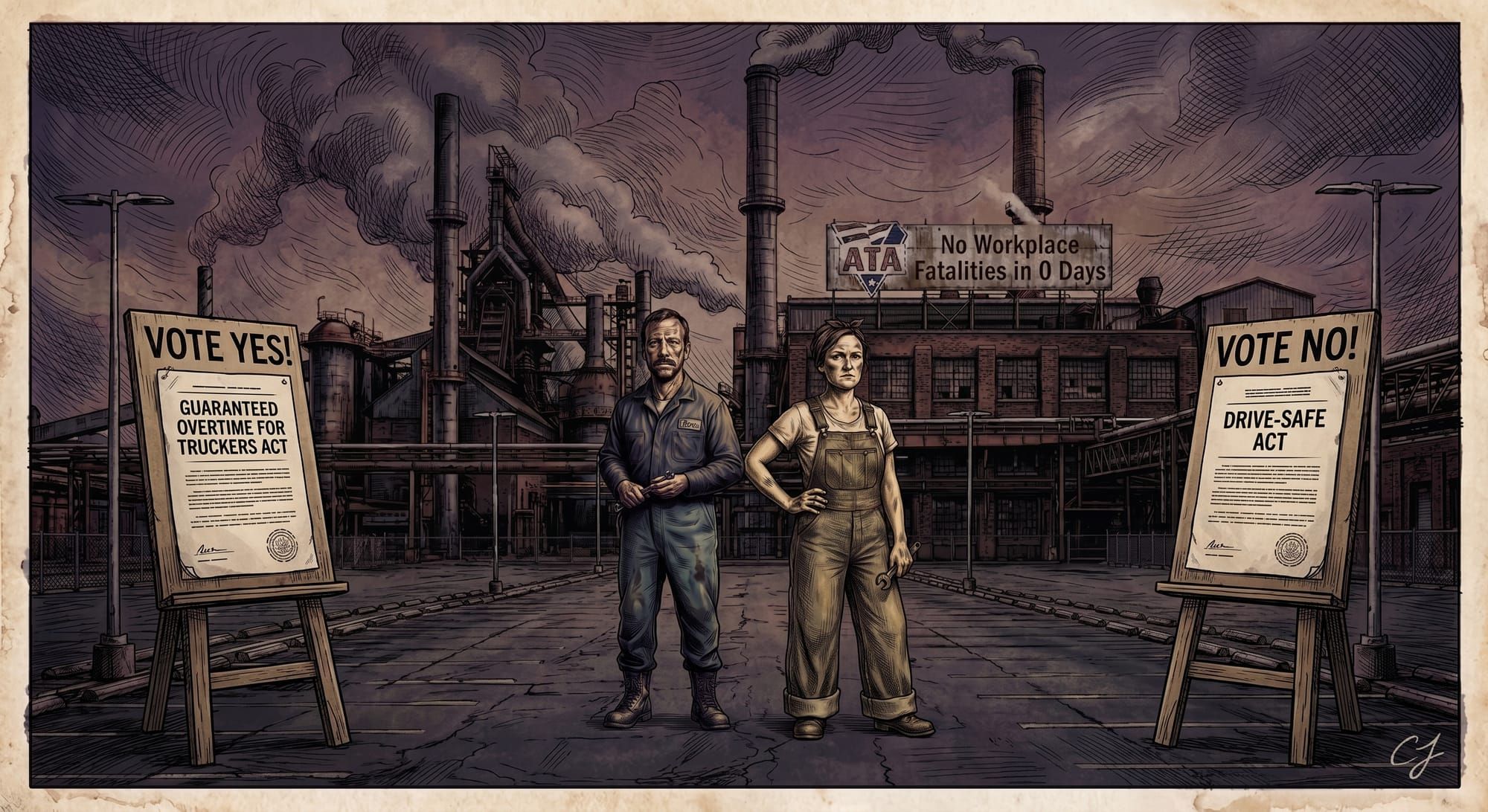
As a driver in the trucking industry, I’ve heard one thing over and over again: “Trucking isn’t what it used to be.” But what did they mean by that? Probably just another old-timer grumbling about the “good old days.” But over the years I started to wonder if they were on to something. Why don’t we get overtime? How about detention pay? It didn’t seem fair, so I started looking into it, and it turns out, those “old-timers” were right. To understand why we need legislation like the Guaranteeing Overtime for Truckers Act today, we need to go back to the 1930s.
The Origins of Unpaid Labor
During the 1930s, the situation was bleak for American workers. Jobs were hard to find, wages had collapsed, and work conditions were terrible. For example, if you were a steelworker at that time, you would be expected to work no less than 84 hours per week. Every two weeks, you would work a double shift, known as the “long-turn” – a 24-hour shift – in order to transition from day to night. “Eight-hour workday? Never heard of it!”
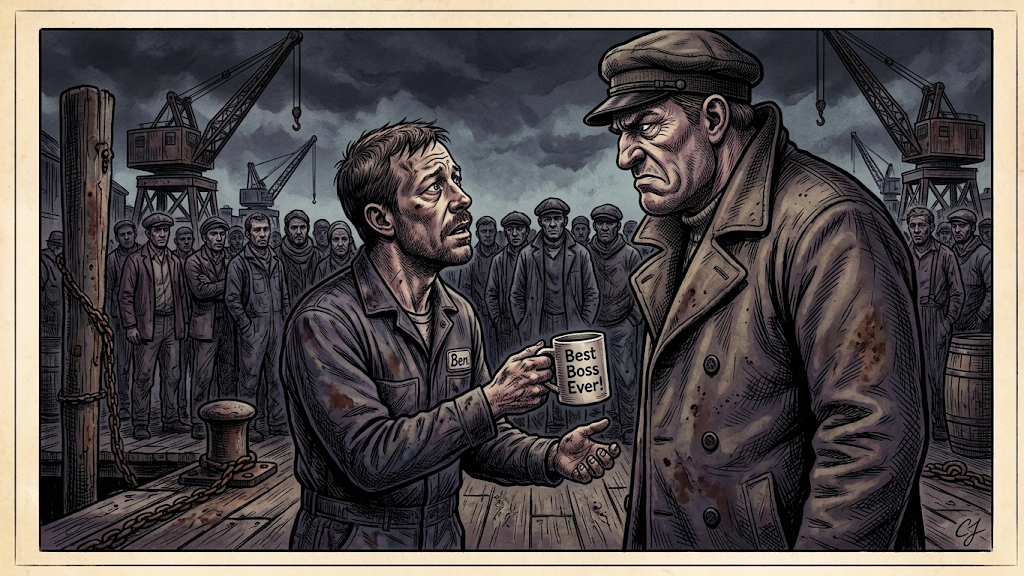
If you were a longshoreman, you would gather at the docks with “the shape-up” crowd – unpaid, hoping to be selected for the shift. The foreman would tap you on the shoulder, or give you a token of some sort, signaling you were selected. It goes without saying this system was full of favoritism. If you really wanted to work, consider buying your boss a beer the night before; maybe you could bring him a mug that says “Best boss ever!”
“Happy days are Here Again” was the rallying cry for Franklin D. Roosevelt’s campaign. He won the presidency in a landslide victory in 1932. In his acceptance speech, he famously declared “I pledge you, I pledge myself, to a ‘New Deal’ for the American people.”
Two landmark bills were passed in the Roosevelt administration. The Wagner Act on July 5, 1935, gave rise to collective bargaining and trade unions; and on June 25, 1938 the “Fair Labor Standards Act” was passed. Together, these bills shaped a new working environment for American laborers.
The FLSA transformed the exploitative nature of the workplace into a fair playing field for all American workers – well, almost all. It instituted a minimum wage, mandated overtime pay, put in place safety rules and regulations, and forced companies to keep meticulous records of employees' hours – making it all but impossible for greedy employers to take advantage of their workers.
But within the bill was a carve-out called the Motor Carrier Exemption, which excluded interstate truck drivers from the same rights afforded to everyone else. That’s right, according to Congress, since safety and working hours were regulated by the Interstate Commerce Commission (ICC), and later by the Department of Transportation (DOT), there was no need to apply the rights granted by the FLSA to truck drivers.
The Golden Age
Despite the exemption, trucking remained a solid career choice at the time, for two reasons:
First, the federal government categorized trucking as a public utility, and the ICC controlled it. Rate bureaus dictated the freight prices, and they were non-negotiable. Obtaining an operating certificate for a new carrier was no easy matter; the applicant had to prove that there was an inadequacy in the market and that their service was genuinely necessary. If the rate bureaus disagreed, they could protest, making the application process lengthy and expensive.
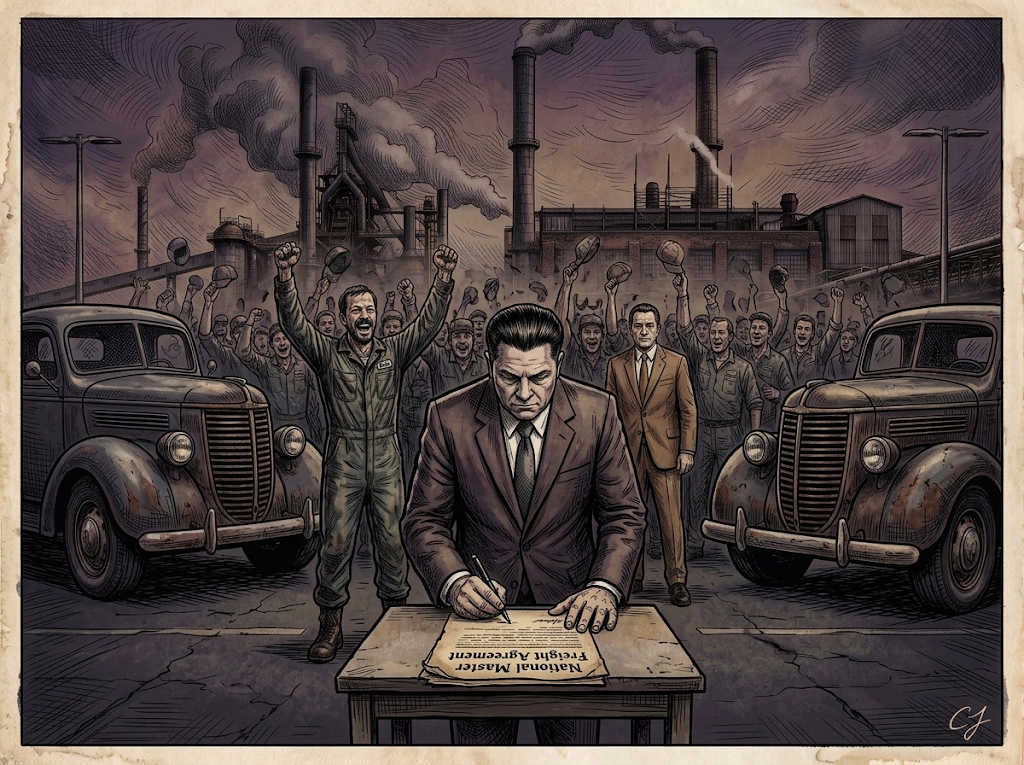
Second, drivers were protected by the union, specifically the International Brotherhood of Teamsters. On January 15, 1964, the president of the Teamsters, Jimmy Hoffa (yes, that Jimmy Hoffa), unified truck drivers across the country under one contract, The National Master Freight Agreement. Truckers under this agreement enjoyed high wages, ranging from $110,000 to $150,000 adjusted for inflation. In addition, this contract gave drivers healthcare, pensions, and the benefits of strict safety rules.
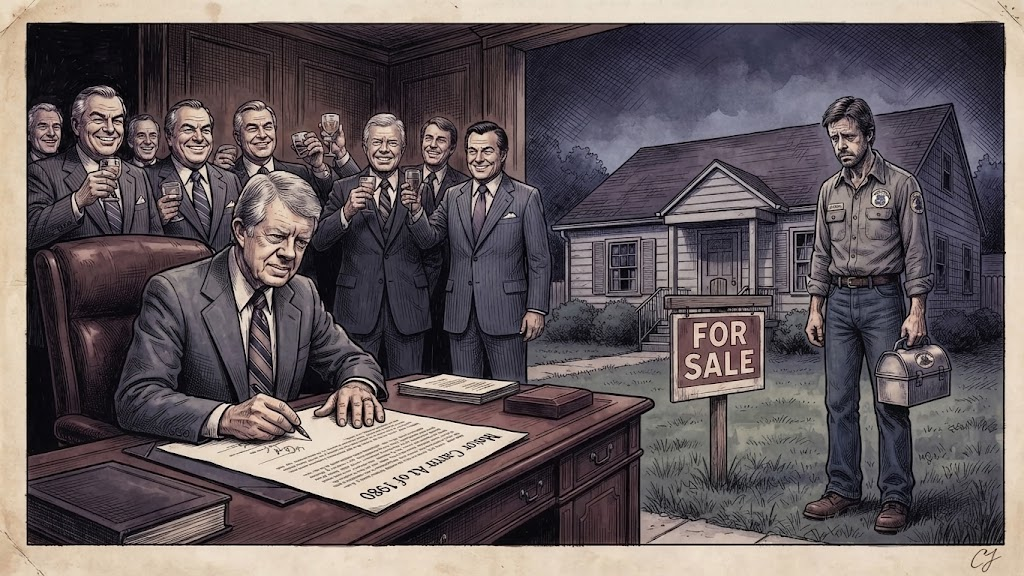
Imagine you’re an Over-The-Road (OTR) driver in 1975. You’re a veteran trucker of 20 years and have a family: a wife, two kids, and a nice, paid-off home. You earn $130,000 per year, adjusted for inflation, a good living. Healthcare is provided for your family, and you have a solid retirement plan. Trucking has provided your household a great middle-class life. Even though you have a great career, inflation has been on the rise and you’re feeling the pinch; everyday essentials have been getting expensive, but candidate Jimmy Carter, who is running for President, promises to fix that. He campaigns on government efficiency and cutting bureaucratic red tape. You cast your vote, and President Jimmy Carter is sworn into office on January 20, 1977. Things are looking up – or so you think.
“The Motor Carrier Act of 1980 will bring the trucking industry into the free enterprise system, where it belongs. It will create a strong presumption in favor of entry by new truckers and expanded service by existing firms. It will build upon progress the Interstate Commerce Commission has begun to make in opening opportunities for minorities, for women, and for all truckers who are eager to provide good service at a competitive price.” - President Jimmy Carter
The Fallout of Deregulation
A couple years after Carter was sworn into office, inflation has come back with a vengeance, surpassing 13%. The Carter Administration had to act fast to bring the cost of goods for consumers down. They blamed the regulatory protections and red tape of the Roosevelt Administration as one of the largest culprits. Carter pushed for deregulation, and one of the targets was the transportation industry. The Motor Carrier Act of 1980 was signed into law by Jimmy Carter on July 1, deregulating the entire industry.
Transportation was no longer treated as a public utility. The barrier to entry was lifted, and the market was flooded with new companies. Because the cost of freight was no longer fixed by rate bureaus, companies could compete against each other – and they did. When new, cheaper freight carriers entered the market and undercut rates, union-represented companies could no longer compete. As hundreds of companies went out of business, union representation plummeted by 50% by 1985, and wages by 25%.
After several pay cuts, your company sends out a memo to all its drivers: “We regret to inform you that we are closing our doors, effective immediately.” You weren’t exactly shocked; you’d been reading article after article of motor carriers filing for bankruptcy. Your biggest challenge now is finding a new job that pays the bills, but there aren’t any. Sure, other trucking companies are hiring, but they are offering you about half of what you were making before, and the longer you search, the lower the wage seems to be. You take what you can get and start working for a low-cost carrier. You pick up a second job and your wife starts working, but you’re still feeling the squeeze. Life just isn’t what it used to be.
“Churn and Burn”
But why did the Motor Carrier Act of 1980 have such a negative effect on driver wages? It created a brutal “race-to-the-bottom” effect with shipping prices. Fleets couldn’t cut the price of fuel or equipment, leaving the driver’s paycheck in the crosshairs, and with the Teamsters out of the way, they saw an opportunity – the Motor Carrier Exemption of the FLSA was back in play. Unpaid labor, low wages, and long hours with no overtime – up to 70 in an 8-day period – are now the new standard for our interstate drivers.
To survive the “race-to-the-bottom” pricing, trucking giants known as mega fleets have developed a new strategy to keep driver wages low, the revolving door model, known as “churn and burn.” Now, the turnover rate of mega carriers is an astonishing 94%, as unsuspecting recruits join and get burned out within a year. As if this isn’t bleak enough, the ATA (American Trucking Associations) and mega carriers are lobbying Congress to pass the Drive-Safe Act, lowering the barrier of entry for interstate drivers from 21 to 18, suppressing wages by flooding the market with new recruits. (Learn more about predatory mega-carrier strategies in my article “TRAPped: the OTR Churn.”)
Solution: “GOT Act”
The industry isn’t facing a driver shortage – approximately 450,000 CDL holders are introduced to the market each year. What the industry is actually facing is a wage shortage, and the fix to that problem is the Guaranteeing Overtime for Truckers Act. By striking the Motor Carrier Exemption from the FLSA, truck drivers would be treated like any other American laborer – pay for all hours worked and overtime after 40 hours. Carriers would be obligated to optimize routes and minimize detention time, transforming the industry into a well-respected, sustainable profession once again.
But Chris Spear, President of the American Trucking Associations, disagrees. He claims:
“This proposal is nothing more than a thinly-veiled attempt to boost trial attorneys’ fees. It would reduce drivers’ paychecks and decimate trucking jobs by upending the pay models that for 85 years have provided family-sustaining wages while growing the U.S. supply chain.”
Chris Spear and the ATA couldn’t be more wrong. Their attempt to sideline this bill is nothing more than an effort to keep the revolving door of the mega-carrier model turning. His claim relies on the business model remaining static, never adapting to a new, fair playing field for truck drivers. In reality, carriers would simply have to operate within the same rule-set as every other employer in America, the FLSA.
“Shippers, receivers and carriers have never been forced to account for all the hours that they keep drivers waiting, since it costs them nothing to do so. By repealing the FLSA exemption, this bill would help make sure that drivers are compensated for all the hours they work.” - Todd Spencer, President and CEO of OODIA.