TPLF Goes Nuclear
Third-Party Litigation Funding (TPLF) and corporate lawsuits are driving up nuclear verdicts, skyrocketing insurance costs, and crushing small trucking fleets.

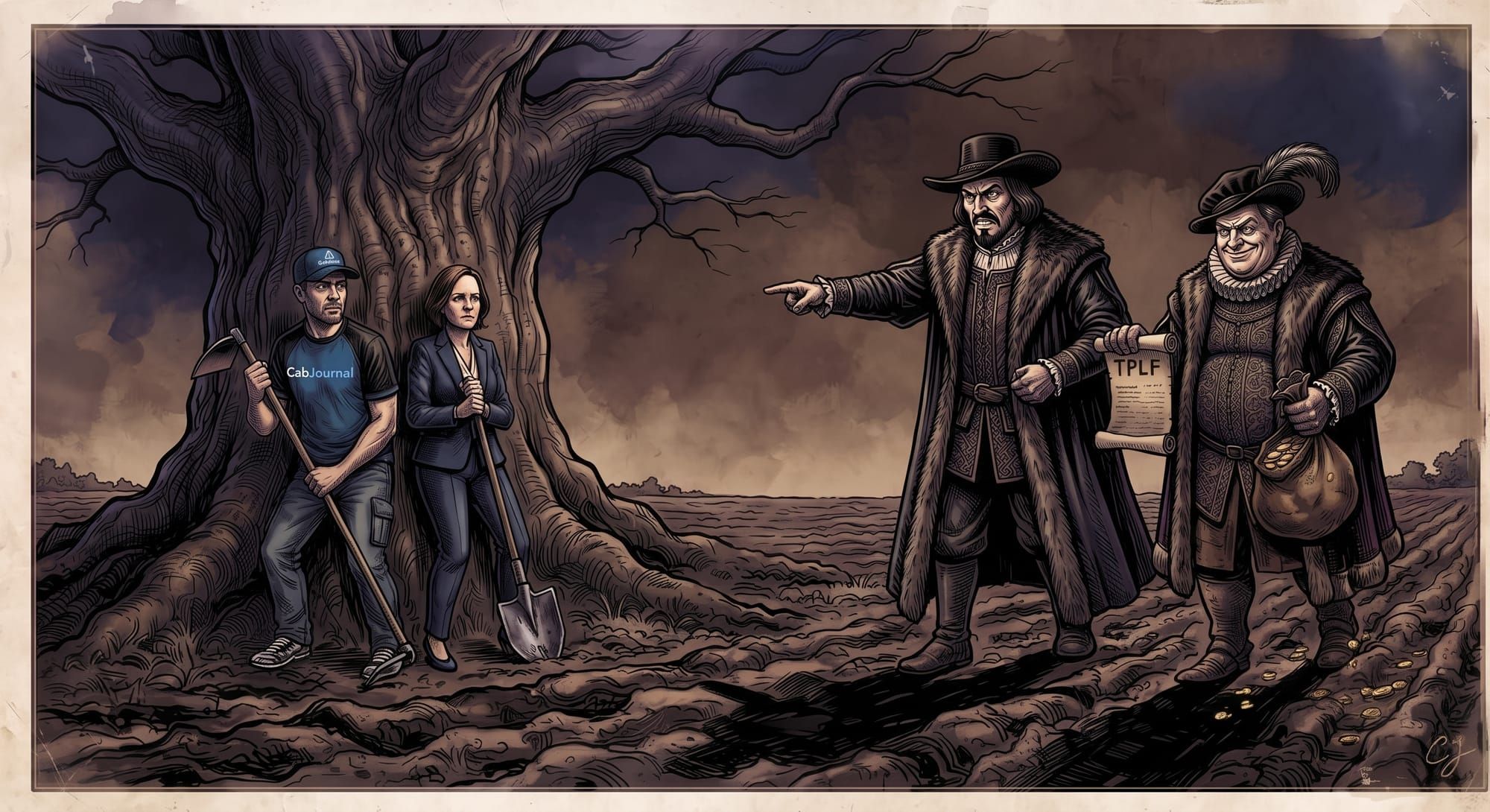
Over the last couple of decades, a new, disturbing trend has taken hold of our legal system. Under the guise of “access to justice,” a for-profit machine has emerged, turning our courts into a betting market – where the winners double their money, and win 90% of the time. Each case is vetted and hand-picked, and the funds are confidential, hidden from everyone except the plaintiff’s law firm. It’s called TPLF (Third-Party Litigation Funding) and has recently been introduced into the U.S. But the roots of TPLF trace all the way back to feudal England under a different name – “maintenance and champerty.”
It wasn’t uncommon for a situation like this to happen in 14th-century England:
A peasant owns a plot of land, passed down through his family for generations. He grew up on the farm, and raised his children there. A feudal lord, seeing this abundant farmland, wants it for his estate and sends his retainers to intimidate him. After unsuccessful attempts, the lord files a lawsuit in the King’s Court. Without the means to defend himself, the peasant stands no chance. Seeing an opportunity, a wealthy speculator offers to fund the defense, demanding half the land in return. With his back against the wall, the peasant accepts the contract.
This has historically been defined as champerty: when an outside party provides funding with the promise of a financial return, if the lawsuit is won. If that wealthy speculator were a Good Samaritan, he would have funded the lawsuit with no expectation of financial gain – this is defined as maintenance.
On its face, maintenance sounds noble – helping those who can’t help themselves. However, in feudal England, it was commonly tied to secret financial payoffs, rivalries, and intimidation. By the end of the 14th-century, the Crown had taken severe measures to abolish both the practices of maintenance and champerty.
The English common-law prohibitions against maintenance and champerty crossed the Atlantic and came to America with the earliest colonists, and remained embedded in the law until recently. In the early 2010s, states became more sympathetic to these ideas in the name of “access to justice.” Having been rebranded and modernized, maintenance and champerty have returned as TPLF.
In 2019, the food distribution giant Sysco filed price-fixing lawsuits against the nation's largest meat processors, including Tyson, Cargill, JBS, National Beef, and Pilgrim’s Pride. After years of litigation, Sysco accepted a tentative settlement agreement of $50 million. In a judicial landscape prior to TPLF, that probably would have been the end of it. It turned out however, that Sysco had entered into a contract with a litigation funding company, Burford Capital, which had invested $140 million into these lawsuits. For Sysco, litigation funding was a win-win. It provided a capital advance that would not have to be paid back unless a huge settlement was reached – allowing them to balance their corporate spreadsheets without having to allocate millions to the lawsuits.
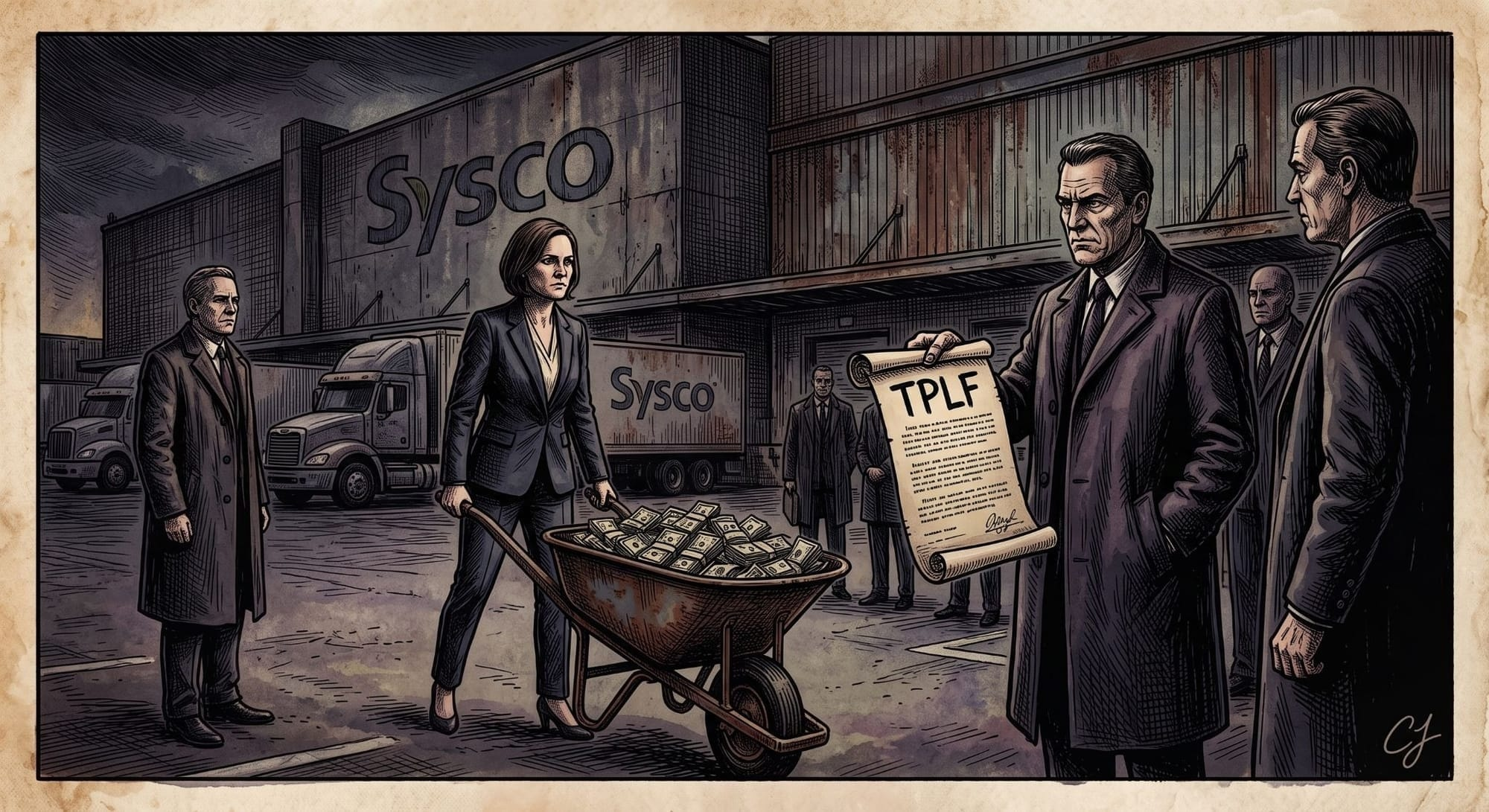
Litigation funding supercharges a plaintiff’s case by providing more capital to fund expensive law firms, discovery, depositions, expert witnesses, scientific studies, mock trials, and shadow juries. This inevitably leads to much higher verdicts.
However, Burford was not happy with the settlement amount. The contractual agreement gave Burford veto power, and they filed for arbitration to block it. Sysco, in turn, sued Burford, and eventually the case landed in the Seventh Circuit Court of Appeals, where the CPA (Capital Provision Agreement), which was never intended to go public, was revealed.
This formula of litigation funding, revealed in cases such as the Sysco and Burford dispute, presents a real ethical dilemma. Price fixing is real corporate wrongdoing that should be punished, but turning that injustice into an opportunity for an outside investor to make money is wrong. Maintenance and champerty were intended for the David vs. Goliath situations, not corporate lawsuits. Burford Capital treated the Sysco lawsuits as an investment opportunity with huge potential profit. Sysco was never the “little guy”; they are the largest broadline food distributor in the U.S. and certainly should be expected to fund their own lawsuits.
Judge Nancy Maldonado wrote: “This case presents perhaps the foremost danger of litigation finance: funders aggressively interfering with, and exerting control over, ongoing litigation, while rejecting the funded party’s preferences with the hope of maximizing returns.”
The influence of litigation has permeated the entire legal landscape, and its effects are especially devastating in the commercial trucking industry. Nuclear verdict lawsuits have caused insurance premiums for carriers across the country to skyrocket. While the federal minimum liability coverage is $750,000, freight brokers routinely require 1-2 million in coverage just to book a load. These sky-high insurance policies create a massive bullseye on the trucking industry for injury law firms. Combine liability coverage with Reptile Theory tactics (see my previous article: Reptiles in the Courtroom) and TPLF, and you have nuclear verdicts. According to ATRI data, the average verdict from 2010 to 2018 increased by a mind-blowing 867%, from $2.3 million to $22.3 million.
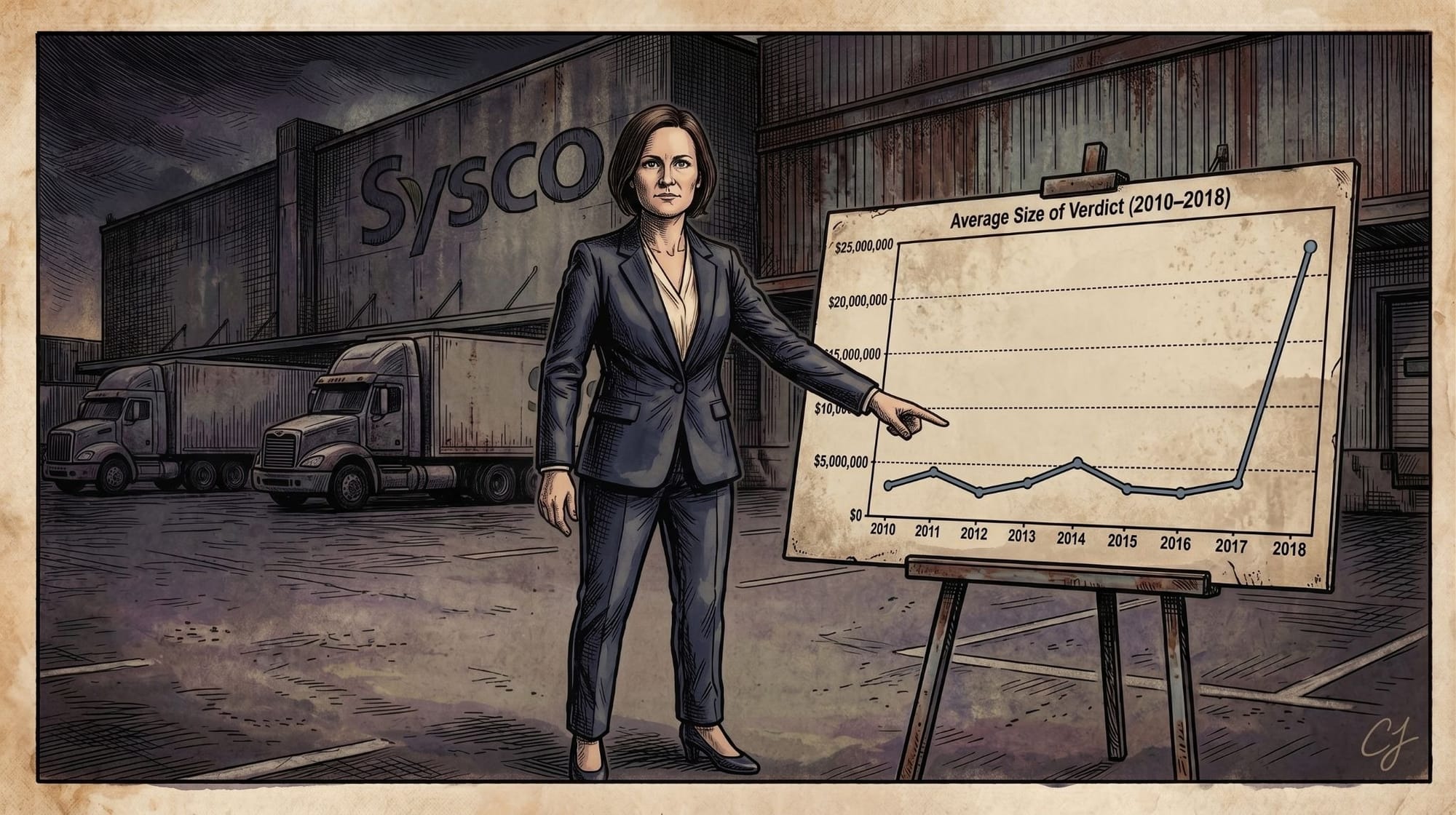
ATRI doesn’t cite litigation funding as a driver of nuclear verdicts. However, it’s hard to not notice the correlation. According to a 2022 report by the GAO (Government Accountability Office), “TPLF has become a more established market in the U.S. in the past decade.” The report says: “...many states have begun to relax these prohibitions…which may have contributed to TPLF’s increased acceptance and recent growth.” Litigation funding is now a $25.8 billion market and is projected to grow to $41.37 billion by 2030 according to a report by The Business Research Company.
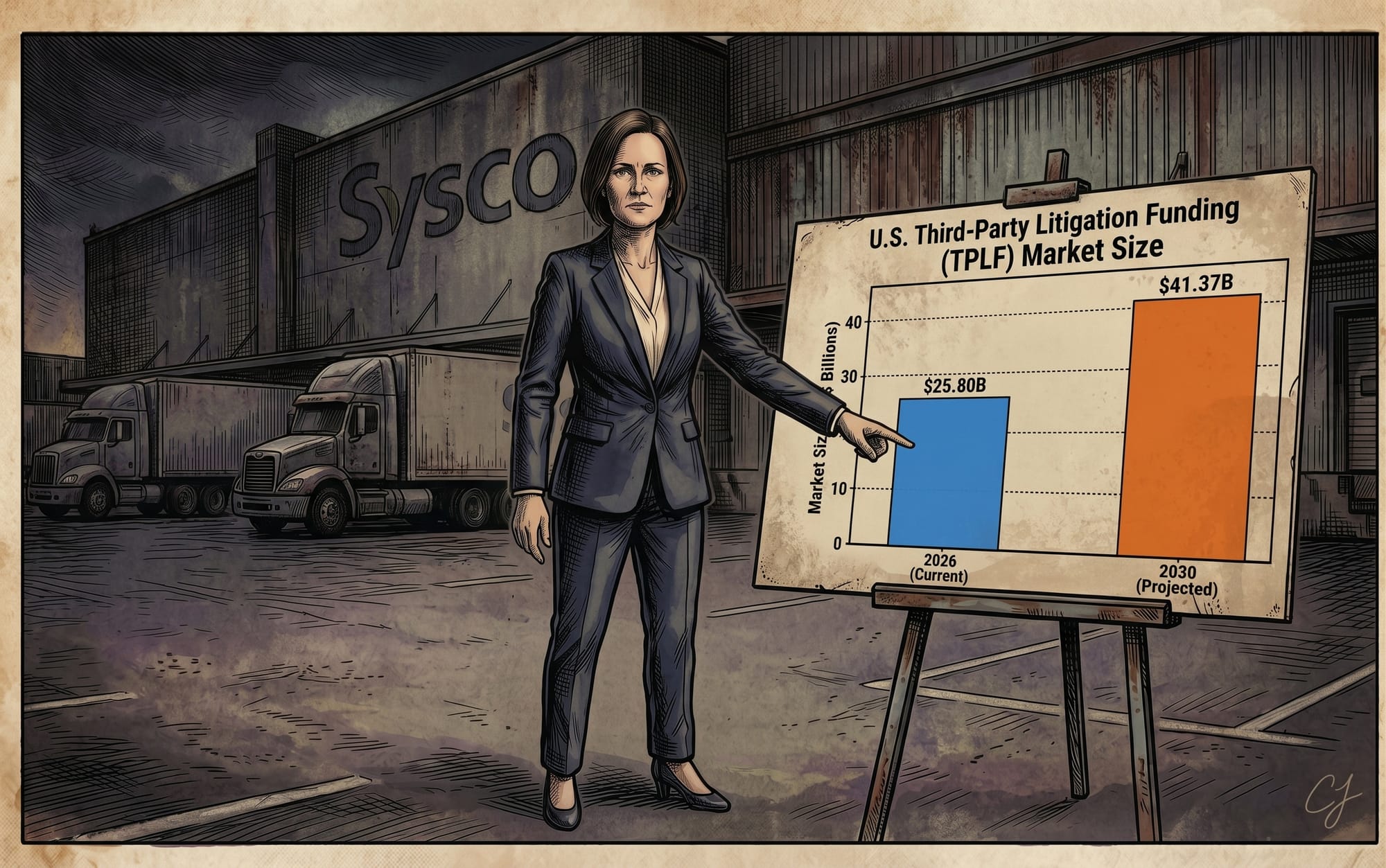
Litigation funding fuels Reptile Theory lawsuits, which in turn skyrockets nuclear verdict outcomes resulting in soaring insurance premiums that squeeze owner-operators and small carriers out of business. Insurance cost per mile, according to ATRI, has risen 47% over the last decade. It’s a vicious cycle, and the only ones who come out on top are the mega-fleets who have tremendous negotiating power with insurance companies and the ever increasing capital required for the litigious landscape.
TPLF is an out-of-control investment scheme that must be stopped. Several states have begun to fight back, passing transparency laws regarding third-party funding, but the issue is not bound to just a few states. It's nationwide. 14th-century England learned that maintenance and champerty, while perhaps virtuous in theory, became tools of exploitation for wealthy nobles to enrich themselves even more. Substitute the wealthy nobles with corporations and law firms, and you understand what’s happening in our legal system today. Corporate litigation funding must be reined in before the owner-operator becomes a relic of the past. TPLF will continue to be widely adopted until the “little guy” can no longer afford to run their business.
Real reform may be on the horizon – at least in federal courtrooms. Representative Darrell Issa has introduced a bill in the House of Representatives to expose shadow funding called the “Litigation Transparency Act.” This bill would mandate parties in a civil action to disclose to the court any investment funding contingent on the outcome of the case. Mandatory transparency would deal a massive blow to TPLF as judges, juries, and the defense would know from the beginning who is pulling the financial strings.